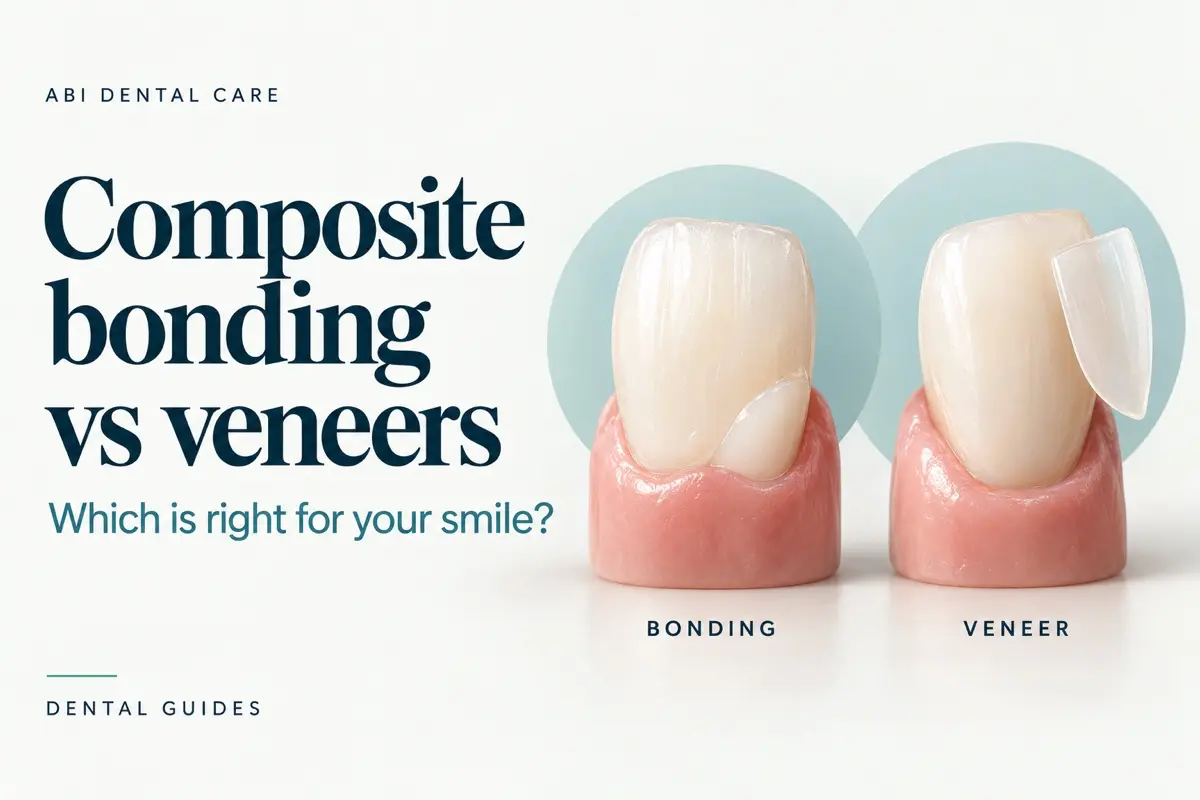
Composite bonding and veneers can both improve the shape, colour, and balance of front teeth. The right option depends on how much change you want, the condition of your teeth, your budget, and how conservative you want treatment to be.
What is composite bonding?
Composite bonding uses tooth-coloured resin, shaped directly onto the tooth. It is commonly used for small chips, uneven edges, minor gaps, and subtle shape changes. In many cases little or no natural enamel needs to be removed, and treatment can often be completed in one visit.
What are veneers?
Veneers are thin shells, usually porcelain or composite, bonded to the front of teeth. They can create a more comprehensive change to colour, shape, proportion, and symmetry. Porcelain is highly stain resistant and generally lasts longer, but preparation may involve removing a small amount of enamel.
The main differences
| Aspect | Bonding | Porcelain veneers |
|---|---|---|
| Method | Resin shaped directly on the tooth. | A shell made for the front of the tooth. |
| Enamel | Often little or no enamel removal for selected additions. | Some enamel preparation may be needed and is irreversible. |
| Care | Polishing and local repairs may be possible. | Chips or failure may require repair or a replacement veneer. |
| Quote | Ask for the number of teeth and scope of bonding. | Ask about material, preparation, laboratory work and future replacement. |
Conservatism
Bonding is usually the more conservative choice for targeted improvements. Veneers may be more appropriate where a broader or more durable aesthetic change is needed.
Appearance and durability
Both treatments can look natural when planned carefully. Porcelain veneers usually retain their colour and polish for longer; composite can stain or chip over time but is typically easier to repair.
Time and cost
Bonding is often completed in one appointment. Porcelain veneers normally require planning, preparation, and fitting visits. Your clinician will explain the expected fees, maintenance, and likely replacement cycle before treatment starts.
For practical planning, see our composite bonding cost guide, bonding maintenance guide and veneer lifespan guide. A composite filling starting fee is not a quotation for cosmetic bonding.
How to choose
A consultation is the safest way to decide. Dr Hamid Kiani will assess your teeth, bite, gum health, existing restorations, and goals before recommending the least invasive option that can achieve a stable result. In some cases, whitening or orthodontic treatment may be considered before either bonding or veneers.
Next step
If you are considering a cosmetic change, book a consultation at Abi Dental Care in Maida Vale. You will receive a clear explanation of suitable options, limitations, expected maintenance, and costs before making a decision.
Leave a Reply