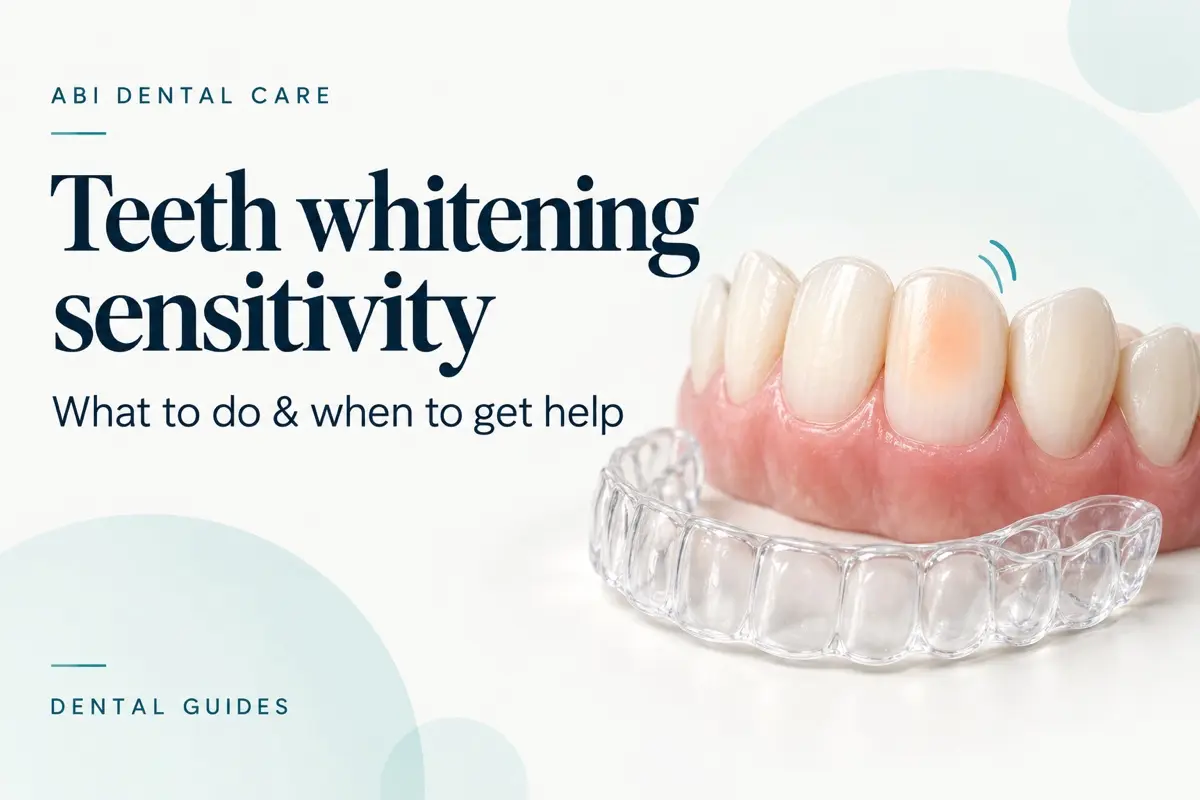
Quick answer: Teeth whitening can cause temporary sensitivity, particularly to cold. It often improves after treatment finishes, but there is no single recovery time for everyone. Do not keep whitening through significant pain. Contact the dentist who prescribed your treatment about whether to pause or change the plan. Severe, worsening or persistent pain, or pain concentrated in one tooth, needs assessment rather than an assumption that whitening is the cause.
A cold drink may suddenly feel uncomfortable halfway through a whitening course. That can be a recognised side effect, but the next step depends on the pattern: brief sensitivity across several teeth is different from a tooth that aches continuously or hurts when you bite. This guide explains what to report, sensible care while arranging advice and questions to ask before starting again.
Why can teeth whitening cause sensitivity?
Whitening gels commonly contain peroxide-based ingredients. These can pass through dental tissues and temporarily irritate the pulp inside a tooth. The American Dental Association’s evidence summary identifies temporary sensitivity and gum irritation as common adverse effects. Gel concentration and contact time can influence sensitivity; stronger or longer is not automatically better.
Gums can also become sore when whitening gel contacts them, including with a poorly fitting tray. Tooth sensitivity and sore gums are different symptoms, so explain both to your dental team. Do not attempt to reshape trays or increase the gel strength yourself.
How long does sensitivity after whitening last?
It is often short-lived. Leeds Teaching Hospitals’ patient guidance says sensitivity and gum whitening normally disappear within a few days after stopping whitening. That is general information, not a deadline that makes every painful symptom safe to ignore.
The important details are whether discomfort is improving, how severe it is and whether one tooth behaves differently. If symptoms continue, contact your treating dentist. Do not wait for a particular number of days if pain is severe, worsening or accompanied by swelling. A dentist may need to investigate another cause.
What should you do if whitening hurts?
Speak to the dentist before pushing ahead
Have your gel name, instructions and treatment dates ready. Explain when the discomfort started, how long each episode lasts and whether your gums are sore. Ask whether you should pause, change the wear time or have the tray fit checked. A hospital leaflet describing one whitening regimen is not a replacement for the instructions for your own prescribed product.
Use gentle daily care
The Oral Health Foundation recommends a soft toothbrush and gentle brushing for sensitive teeth. A toothpaste formulated for sensitivity may help; ask your dental team which fluoride toothpaste is appropriate for you. Avoid scrubbing harder in an attempt to remove stains. After acidic food or drink, wait at least an hour before brushing.
Avoid very cold food and drink if they trigger discomfort during your whitening course. Continue the care recommended by your dentist, and ask about products before combining several whitening treatments. There is no need to improvise with household bleaching products.
Do not treat pain as a measure of progress
More discomfort does not mean a better result. The NHS explains that professional whitening can still cause side effects, including sensitivity and soreness. Tell your dentist about side effects that bother you. Your plan should take your comfort and oral health into account, rather than aiming for a shade at any cost.
When should you contact a dentist?
| Pattern | Next step |
|---|---|
| Brief sensitivity during a whitening course | Report it to the prescribing dentist and follow their advice about the course and sensitivity care. |
| One tooth, persistent ache or pain on biting | Arrange assessment. Do not assume all pain appearing during whitening is caused by whitening. |
| Severe pain, swelling, fever or a suspected abscess | Seek urgent dental advice. If you cannot obtain urgent care, contact NHS 111. |
| Trouble breathing, swallowing or speaking; eye or neck swelling; or extensive mouth swelling | Call 999 or go to A&E for emergency medical help. Do not drive yourself. |
These escalation routes follow NHS toothache advice and NHS abscess guidance. For a tooth that hurts during chewing, our tooth pain when biting guide explains overlapping causes. Whitening does not replace diagnosis or treatment of decay, a crack or infection.
Can you whiten teeth that are already sensitive?
Discuss the sensitivity before beginning. The General Dental Council says whitening should follow assessment by a registered dentist and their prescription. The assessment is an opportunity to explain previous reactions and ask whether whitening is suitable. It is not possible to promise a completely sensitivity-free course.
Ask the practice:
- What might be causing my existing sensitivity?
- Which whitening option is suitable, and how will it be supervised?
- What should I do if my teeth or gums become sore?
- What is included in the quotation: assessment, trays, gel and review?
- Will existing restorations affect the shade plan or add separate costs?
What if you have bonding, veneers or crowns?
Whitening changes natural teeth rather than the colour of existing restorations. Bristol Dental School explains this limitation. A colour mismatch after whitening does not mean you should use more gel on the restoration. Discuss shade planning before new visible dental work, and ask whether existing work needs any attention.
Our bonding versus veneers comparison and smile makeover page explain how different options may be considered together.
Common questions
Does sensitivity mean whitening has permanently damaged my teeth?
Sensitivity can be temporary, but it does not establish what is happening in an individual tooth. Report significant or continuing symptoms so a dentist can assess the cause.
Should I switch to stronger gel to finish sooner?
Do not change the product or instructions without the prescribing dentist’s advice. Concentration and exposure affect sensitivity, and treatment is not a race to the strongest gel.
Can I use a sensitive toothpaste during whitening?
Bristol Dental School recommends trying sensitive toothpaste during whitening. Ask your dental team about a suitable product and how to use it alongside your own treatment instructions.
Discuss whitening at Abi Dental Care
For teeth whitening in Maida Vale, request an assessment or call 020 7286 2626. Ask the team which options are currently offered, confirm appointment availability and request a written quotation before treatment.
General patient information, not an individual diagnosis. Sources checked on 30 October 2026. This is an editorial source check, not a clinical review of this article.
Leave a Reply